Armenian Christian Fellowship Church Services
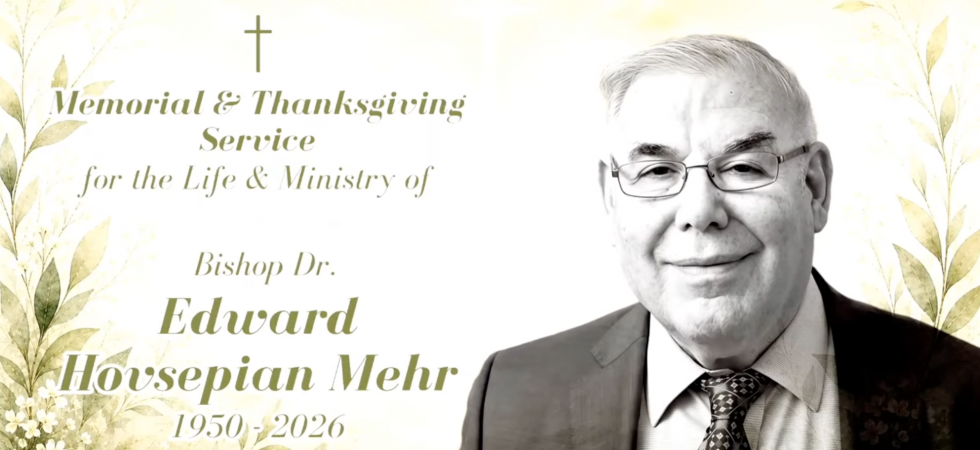
Memorial Service Program This transcript documents the memorial service for Bishop Dr. Edward Hovsepian-Mehr, a prominent leader in the Iranian Christian community, held on July 25, 2026. The ceremony, hosted by the Iranian Christian...
From the bottom of our hearts, we thank you for the many messages of love, sympathy, and prayer you have shared with us over the past few days. Your kindness, support, and words of...
Brother Edward distills Psalm 16 into four vital declarations, emphasizing that Jesus’ resurrection provides modern believers with constant presence, stability, joy, and victory over death. Through personal anecdotes of his father’s late-life conversion, he illustrates that a relationship with the living Christ is the only antidote to life’s anxieties.
This sermon distills the story of Lazarus into a message of resilience for those facing “dead-end” situations. It frames hope as a disciplined trust in Christ’s authority over death and injustice, urging the faithful to maintain spiritual joy and intercessory vigor despite the darkness of current events.
This sermon defines Jesus as the “Spring of Life,” offering renewal, internal satisfaction, and eternal growth. Using personal testimony and the analogy of a cancer cure, Brother Edward emphasizes that receiving this life necessitates sharing it with others, transforming a small church into a vital channel for the community.
Hovan delivers a farewell sermon in English, which is simultaneously translated into Armenian. The message serves as both a theological teaching on the “Great Commission” and a personal announcement regarding Hovan and Pegah’s transition to Dallas for church planting training.
This memorial service for Lena Harutyunyan celebrates her life as a devoted mother and educator while offering theological comfort. The message emphasizes that for believers, death is not a terrifying end but a transition to eternal glory and a “perfect submission” to God’s presence, facilitated by Christ’s victory over the grave.
Hovan shares a message on the Hope of Christmas. He explores the theme of hope through the birth of Christ. Hovan contrasts worldly celebrations with the spiritual reality of Jesus as the “Light of the World.” By focusing on God’s presence, redemption, and eternal life, the sermon calls believers to reflect Christ’s light in a dark world.
A sermon exhorting total consecration to Christ. Using the narrative of Moses and Pharaoh, Brother Edward warns against the enemy’s tactics of compromise regarding lifestyle, family, and finances. He concludes that true victory and “success” in faith require an uncompromising, 100% commitment to following Jesus.
Brother Edward shares a message about preparing for Pentecost. Drawing from Elijah’s victory on Mount Carmel, the sermon calls for total spiritual consecration. By repairing broken altars, seeking unity, and humbling themselves, the congregation prepares for a “Pentecostal fire” that consumes indifference and a “heavenly rain” that ends spiritual famine, restoring the community to the living God.
Rozita shares a message from Luke 8:22-25. This sermon distills the story of Jesus calming the storm into three lessons: the limits of human ability, the revelation of God’s sovereign character, and the preparation for divine mission. Through personal testimonies of chronic illness and bereavement, Rozita encourages the faithful to trust Christ’s presence in their “boat.”
Nassi shares a message on having the right motives in Christian life and ministry. She explores the theology of intention. Using the selection of King David as a framework, it argues that God bypasses external stature to weigh the heart’s motives. The sermon warns that “wrong “Niyat”—seeking ego or validation—hinders prayer and causes spiritual burnout, urging a return to God-pleasing service.
The sermon warns against spiritual stagnation by examining Lot’s wife. Pegah argues that looking back at past comforts or traumas causes believers to become “pillars of salt”—immobile and useless. Congregants are urged to tighten their connection to Christ, leave their comfort zones, and press toward God’s future promises.
Brother Sasan explores the genealogy of Jesus in Matthew to offer hope during the Advent season. He emphasizes God’s faithfulness, sovereignty over history, and ability to use flawed individuals. The sermon encourages the congregation to trust God’s timing and remain active participants in His redemptive symphony despite life’s frustrations.
This sermon explores the reality of hell as the absence of God’s grace. Contrasting the “hell” of war with the eternal hell, the preacher argues that while human kindness exists on earth due to God’s presence, hell is a self-chosen exile where love and peace cannot exist.
This sermon refutes popular misconceptions of heaven as a boring, static existence. By framing the resurrection as a “D-Day” victory over Satan, Brother Charles presents heaven as a dynamic, intellectually stimulating “New Earth” where believers, currently in a waiting state, will eventually receive transformed bodies for eternal adventure.
Brother Edward delivers a Pentecost-focused sermon on the Holy Spirit’s role in transforming the “inner man.” He argues that true spiritual vitality comes from a deep, love-based relationship with Christ rather than superficial rituals or need-based prayers. He calls for a permanent internal shift from “stone” to “flesh.”
The sermon explores the “Glorious Hope” of Christianity as the antidote to life’s inherent futility. By examining the nature of death as “sleep” and the resurrection as “victory,” the preacher encourages believers to live joyfully, focusing on the eternal home Christ is currently preparing for them.
This Christmas sermon explores three reasons for the Incarnation: to make God personally known, to provide undeniable proof of His love through sacrifice, and to establish God as a compassionate participant in human suffering. It emphasizes that through Christ, God is no longer distant or unknown but intimately present.
The sermon focused on the Book of Ruth, specifically highlighting Ruth 1:16-17. Rozita detailed the historical context of the 10th century BC, a period of moral corruption under the Judges.
Brother Edward delivers a powerful sermon on the “God of Hope,” arguing that true hope only emerges when human resources are exhausted. Through biblical examples and modern testimonies of restoration, he encourages the congregation to trust God’s timing and power, especially when facing life’s “dead ends” and spiritual despondency.
This sermon explores Jeremiah 17:5-8, contrasting the “cursed” life of human reliance with the “blessed” life of divine trust. Using the analogy of a sponge and a desert shrub, Hovan argues that only a deep, rooted connection to Jesus Christ ensures fruitfulness and resilience during life’s droughts.
The sermon explores the reality of feeling overwhelmed by life’s burdens. Using Moses and Job as examples, it posits that while trials are inevitable, they are precisely calibrated by God. Because God is the “Architect” who designed our capacity, He provides the exact grace needed to endure every specific trial.
The sermon identifies focusing on “Heavenly Hope” as the sixth and vital way to defeat despondency. By contrasting the fleeting nature of life (described as steam or wilted flowers) with the “Living Hope” of eternity, the preacher urges believers to prioritize the eternal over the tangible and temporary.
A profound meditation on Christ’s endurance through loneliness, silence, physical agony, and spiritual punishment. Brother Charles emphasizes that Jesus’ death satisfied divine justice, enabling a “once for all” exchange where human sin is wiped away. The service concludes with communion, celebrating the victory of the resurrection and the “paid in full” debt.
The sermon explores the dinner at Bethany (John 12:1-11), contrasting different responses to Jesus’ presence. Through Lazarus (witness), Martha (service), and Mary (worship), Rozita emphasizes that while service is necessary, it must never supersede intimate fellowship and sacrificial devotion to Christ
This sermon explores the synergy between divine promise and human diligence. Using the examples of Moses and David, Brother Elias argues that God’s blessings require active consent and the application of given power. Believers must expel negative “word-seeds” and prioritize God’s kingdom to see promises manifest.
The sermon addresses overcoming despondency by shifting the focus of prayer from personal petitions to seeking God’s face. Drawing from Psalm 105:4, Brother Edward shares a personal testimony of moving from prayer exhaustion to joy by prioritizing divine fellowship and God’s attributes over life’s various challenges and requests.